- The Operational Reality of High Stakes Arcade Machine Yields
- Mainboard Processing and Industrial Component Integration
- Mathematical Calibration and Predictable Output Tuning
- Anti Cheat Defense and Hardware Protection Protocols
- Commercial Payback and Hardware Total Cost of Ownership
- Factory Quality Assurance and Acceptance Testing
- Operator Actionable Troubleshooting and Diagnostic Reference
- Frequently Asked Questions
Hi, I am Engineer Wang, lead hardware and systems architect at Guangzhou Miba Animation Technology Co., Ltd. (Arcade Manufacturer). Over my 12 years of designing and troubleshooting commercial floor equipment in Panyu, I have seen venue operators make the same critical mistakes when deploying high-stakes multi-player cabinets. An animal roulette arcade machine, such as the widely popular 3D Forest Dance (森林舞会), is a massive revenue driver for any arcade floor. However, a single crash during a Saturday night peak hour or a mathematical vulnerability exploited by an EMP jammer can wipe out an entire week of profit.
Operators do not just need a colorful LED cabinet. You need an industrial-grade money-printing engine backed by bulletproof hardware, shielded I/O boards, and tightly calibrated RTP (Return to Player) algorithms. In this breakdown, I will walk you through exactly how we architect, test, and calibrate these machines for zero downtime and maximum yield. For factory-direct procurement and comprehensive engineering specs, consult our master guide on turnkey arcade cabinet manufacturing and B2B procurement.
Evaluating turnkey cabinet hardware or looking to test our playable Unity game demos? Connect with our engineering team or reach me (Engineer Wang) directly via WhatsApp at +86 17620842078 for instant video demonstrations on our test bench.
| Feature Vector | Standard Generic Competitor Boards | Our Factory Direct Architecture (Arcade Manufacturer) | | — | — | — | | **I/O Surge Protection** | Unshielded, vulnerable to 150V pulses | Optical isolation and <5ps TVS transient clamping | | **Mathematical RTP Model** | Fixed, highly volatile, prone to player drain | Dynamic volatility dampening, configurable 85%-98% RTP | | **Chassis Material** | 0.8mm plastic or thin gauge steel | 1.5mm cold-rolled CNC sheet metal with anti-static coating | | **Payout Mechanism** | Single-channel pulse hopper (frequent jams) | Dual intelligent hopper support with anti-stringing logic | | **Technical Support** | Middlemen with no source code access | Direct 12-hour SLA from the actual firmware architects |The Operational Reality of High Stakes Arcade Machine Yields
When managing a high-traffic arcade floor, the stakes for multi-station games are inherently higher. An animal roulette arcade machine typically supports 6, 8, or even 12 players simultaneously. From the perspective of a venue owner, the primary concerns are never abstract technical jargon. You care about the integrity of the coin-in and ticket-out ecosystem.
Will the central screen freeze right after a mega-payout is triggered, causing players to aggressively demand manual cash refunds? Will opportunistic cheaters use a pocket-sized electromagnetic pulse (EMP) jammer to spoof the bill validator into crediting ghost pulses? Can the mathematical engine handle heavy, unbalanced betting on the “Red Lion” (highest multiplier) without draining the daily operating float?
In our engineering labs, we approach every circuit trace and line of code by answering these exact operational nightmares. We do not just build games; we engineer localized economic systems. We integrate hardware watchdogs, dynamic payout algorithms, and physical security measures precisely because we understand that any vulnerability directly subtracts from your venue net profit. Every decision, from the thickness of the JAMMA edge connector gold plating to the encryption of the internal communication bus, is designed to protect your investment and guarantee a fast payback period.
Mainboard Processing and Industrial Component Integration

The core processing environment of a modern Forest Dance machine demands both heavy graphical computation for the 3D roulette wheel and deterministic real-time processing for the peripheral I/O. Players expect smooth 60 FPS animations on a massive central 55-inch or 65-inch LCD, while the embedded microcontrollers must simultaneously read inputs from 8 different player satellite panels without dropping a single polling frame.
Our architecture splits the workload. We utilize a high-performance x86 or ARM Cortex-A series SoC for rendering the 3D graphical engine (often built on Unity or a proprietary C++ rendering pipeline). This master unit communicates via an encrypted RS-485 or CAN bus protocol to dedicated microcontroller units (MCUs) residing in each player satellite.
This distributed topology ensures that even if a graphical frame drops, the coin acceptor pulses, bet button states, and hopper payout logic remain strictly deterministic and real-time. By decentralizing the I/O processing, we eliminate the risk of a single bottleneck causing the entire multi-player animal roulette arcade machine to lag or crash. Furthermore, the communication lines between the central mainboard and the satellite consoles are galvanically isolated.
| Component Tier | Specification and Engineering Details | | — | — | | **Central Processor** | Industrial Quad-Core SoC with active thermal management | | **Communication Bus** | Encrypted RS-485 with CRC error checking | | **Player Satellites** | Dedicated Cortex-M MCUs for zero-latency button and coin I/O | | **Power Supply** | 800W+ Switching Power Supply (Mean Well) with over-voltage protection | | **Display Sync** | HDMI/DP out to 4K central LCD, minimal input lag processing |Mathematical Calibration and Predictable Output Tuning
The visual thrill of the Forest Dance game lies in its 3D animal characters (Lion, Panda, Monkey, Rabbit) combined with three color multipliers (Red, Green, Yellow), creating 12 distinct betting targets. However, the true heartbeat of the machine is the Return to Player (RTP) mathematical model.
Many generic boards use amateur random number generators (RNG) that suffer from wild volatility swings. A venue operator might see massive profits on Monday, only for the machine to pay out heavy multipliers consecutively on Tuesday, destroying the weekly margin.
Our firmware utilizes an advanced dynamic volatility dampening algorithm. Through the operator’s admin menu, you can calibrate the target RTP (typically adjustable between 85% and 98%) and the volatility index. The system monitors the machine’s internal ledger (Total Coin In vs. Total Ticket/Coin Out). If players are heavily stacking bets on the high-payout Red Lion (often 40x to 46x multiplier), the algorithm continuously assesses the risk exposure against the current float pool.
This does not mean the game simply forces a loss. Instead, the pseudo-random number generator (PRNG) seamlessly shifts the probability distribution across the hundreds of underlying virtual stops on the roulette wheel, maintaining mathematically proven payout percentages over the long term while preserving the authentic randomness and excitement for the players. We provide operators with comprehensive dip-switch matrices and software backend tutorials to dial in these math models perfectly for their specific demographic and risk tolerance.
Need the complete PCB schematics, I/O pinout mappings, or mathematical RTP distribution sheets for your technical team? Request our full factory engineering package directly through our Custom Development Portal.
Anti Cheat Defense and Hardware Protection Protocols
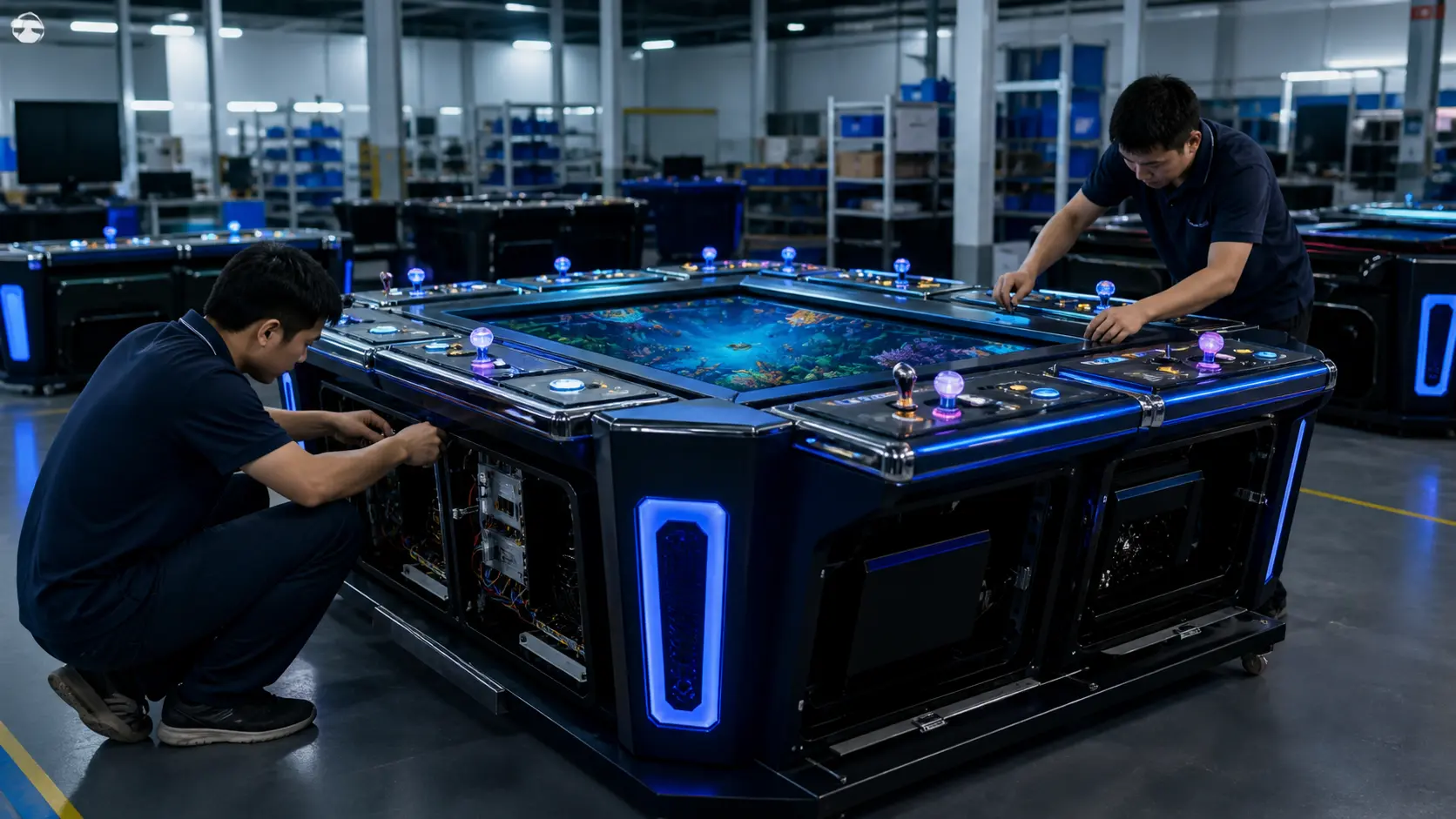
Arcade security is an escalating arms race. The animal roulette arcade machine, due to its high cash-in velocity, is a primary target for sophisticated organized cheating rings. Operators worldwide constantly battle against optical wire exploits (stringing), high-frequency sparkers, and Bluetooth EMP jammers.
In our Panyu manufacturing base, we mandate an aggressive security posture on every cabinet that leaves the assembly line.
First, we address electromagnetic interference. Cheap machines use unshielded wiring. When a cheater triggers an EMP jammer near the coin slot, the immense electromagnetic burst induces a transient voltage spike on the data lines, tricking the CPU into registering hundreds of false coin pulses. To combat this, our I/O boards are equipped with high-speed optocouplers and Transient Voltage Suppression (TVS) diodes. The optocouplers physically isolate the external pulse lines from the internal logic circuits using light, while the TVS diodes clamp any voltage surge exceeding 5V within less than 5 picoseconds.
Second, we deploy dynamic memory scrambling on the RAM. Hackers attempt to map the memory addresses of the credit values to freeze or manipulate them. Our proprietary anti-cheat watchdog dynamically shifts the memory addresses holding the ledger data multiple times per second, rendering static memory injection attacks useless.
Commercial Payback and Hardware Total Cost of Ownership
When evaluating a multi-player cabinet, the initial Capital Expenditure (CAPEX) must be weighed against the Operational Expenditure (OPEX) and the projected Return on Investment (ROI). Buying the cheapest machine from a trading company often results in devastating OPEX due to frequent downtime, motherboard replacements, and stolen credits.
Purchasing directly from an OEM factory like Arcade Manufacturer dramatically alters the economics. By cutting out the middleman, operators receive industrial-grade components at wholesale pricing, ensuring the machine stays on the floor generating revenue rather than sitting in the backroom waiting for a proprietary IC chip.
Consider a standard 8-player Forest Dance machine deployed in a medium-to-high traffic venue.
| Financial Metric | Baseline Projection (8-Player Cabinet) | | — | — | | **Average Daily Coin-In (Gross)** | $600 – $1,200 | | **Configured RTP Yield** | 92% | | **Daily Net Retention** | $48 – $96 | | **Estimated Monthly Gross Profit** | $1,440 – $2,880 | | **Estimated ROI Payback Period** | 45 to 85 Days |This ROI timeline relies entirely on continuous uptime. If an inferior bill validator jams three times a week, or if a power supply fails during a weekend, that payback period stretches infinitely. We engineer for maximum uptime to ensure that the 45-day ROI projection is a hard mathematical reality, not a marketing fantasy.
Factory Quality Assurance and Acceptance Testing
Before any arcade machine is crated for ocean freight, it must pass our stringent Factory Acceptance Test (FAT) protocol. We do not just power the machine on and verify the LED strips work; we subject the entire hardware ecosystem to industrial stress testing.
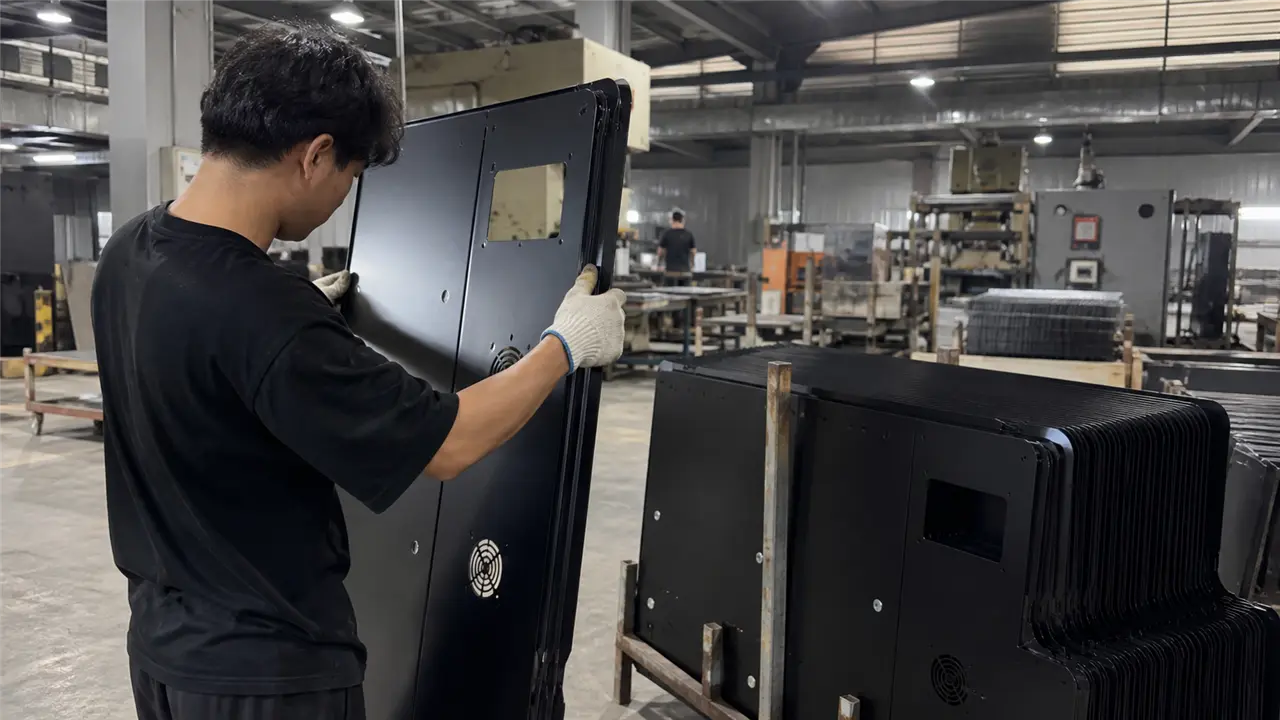
On our Panyu assembly floor, every cabinet chassis is fabricated from 1.5mm cold-rolled CNC sheet metal, ensuring structural rigidity that can withstand years of aggressive player interaction and transit vibrations.
The electronic QA protocol is relentless. We place the fully assembled motherboards and power supplies into our environmental testing lab for a 72-hour continuous burn-in cycle at elevated temperatures (45°C) and maximum CPU/GPU load. This thermal stress test forces early mortality failures in weak capacitors or poorly soldered joints, guaranteeing that only proven, stable silicon makes it to your venue. Furthermore, we intentionally inject 2,500V static pulses into the cabinet exterior and control panels to verify grounding integrity and EMP rejection capabilities. Operators are always welcome to request live video walk-throughs of their specific batch undergoing FAT before final payment.
Operator Actionable Troubleshooting and Diagnostic Reference
Even with industrial-grade hardware, operators must be equipped to handle routine maintenance and swap consumable parts like buttons, microswitches, or hoppers. Below is an actionable troubleshooting reference drawn from my years of field support.
Symptom: Hopper Continues to Spin but No Tickets or Coins Dispense
- Diagnosis: Optical sensor blocked by debris or mechanical jam in the payout disc.
- Action: Power off the machine. Remove the hopper unit. Use compressed air to clean the opto-sensor bridge. Ensure the payout disc corresponds to the physical size of the tokens being used.
Symptom: Bill Validator Rejects All Legitimate Currency
- Diagnosis: Validator optical lenses are dirty or the firmware requires an update for new currency designs.
- Action: Open the validator head and clean the LED lenses with a microfiber cloth and isopropyl alcohol. Verify the dip switches on the side of the unit correspond to the accepted denominations set in the game’s admin menu.
Symptom: Player Satellite Panel Unresponsive (Lights On, No Input)
- Diagnosis: RS-485 communication line failure between the mainboard and the satellite MCU.
- Action: Check the RJ45 or JST connecting cables. Inspect the specific satellite board for a blinking green TX/RX LED. If the LED is solid red, the MCU has halted. Power cycle the machine; if the issue persists, replace the isolated satellite board.
Standard JAMMA and Peripheral I/O Pinout Guide
For technicians integrating aftermarket bill acceptors or custom control panels, maintaining the correct pin logic is vital. (Note: Always consult your specific board revision manual).
- Pin 8 (Solder Side): Coin Acceptor 1 Signal (Active Low)
- Pin 16 (Parts Side): Player Bet Button 1 (Active Low)
- Pin 24 (Solder Side): Hopper Payout Trigger
- Pin 26 (Parts Side): Ticket Dispenser Enable (5V Logic)
- GND (Pins 1, 2, 27, 28): Common Ground (Must be tied to chassis earth for EMI shielding)
Related Engineering References and Floor Operational Guides
- For our factory engineering standards, review our multiplayer electronic roulette manufacturing framework.
- Compare terminal configurations in our 8-player electronic roulette machine specifications.
- Inspect anti-cheating laser circuits in our electronic roulette motherboard sensor calibration guide.
- Calculate coin-in margins using our casino-grade roulette machine ROI model.
Frequently Asked Questions
How do I adjust the payout difficulty and RTP on the animal roulette machine?
Access the operator admin menu using the physical audit key on the cabinet. Navigate to the ‘System Settings’ or ‘Math Calibration’ tab. Here, you can define the exact baseline payout percentage (e.g., 94%) and adjust the maximum bet limits. Always perform a hard reset on the current ledger data when altering the RTP to ensure the algorithm begins calculating from a clean slate.
Are your Forest Dance cabinets compatible with our existing card swipe systems?
Absolutely. Our I/O boards support industry-standard pulse outputs, RS232, and ccTalk protocols. Whether you are using Intercard, Embed, or a proprietary RFID swipe system, you simply wire the card reader’s pulse output into the bill validator input pins on our board. We can provide detailed wiring diagrams for seamless integration.
What happens if the power fails in the middle of a massive payout round?
Our architecture includes localized SRAM backed by a supercapacitor or lithium coin cell. If the mains power is violently interrupted, the current state of the game, including all bets placed, the position of the roulette wheel, and the exact credit balance of all 8 players, is instantly saved to non-volatile memory. Upon power restoration, the machine resumes exactly where it left off.
Can we customize the 3D graphics or replace the animal models for a different market?
Yes. Because we are the primary developers and factory, we offer full custom game development and white-labeling services. If your regional market prefers a car racing theme, a deep-sea ocean theme, or entirely different intellectual property instead of the classic Forest Dance animals, our Unity team can reskin the entire game while preserving the mathematically proven roulette engine beneath it.
What is the lead time and Minimum Order Quantity (MOQ) for an 8-player cabinet?
For standard configurations, our lead time is typically 15 to 25 business days from our Panyu factory. We understand that operators need to test the waters, so our MOQ for fully assembled multi-player cabinets is just 1 unit. For bare motherboards and software kits, we can ship immediately via DHL air freight.
Ready to eliminate revenue leakage, launch custom white-label gaming titles, or order container-load arcade cabinets directly from our Panyu factory? Contact me (Engineer Wang) directly via WhatsApp/WeChat (+86 17620842078), Telegram (https://t.me/JLwyc), or email (miba515527@gmail.com) for a 24-hour formal quotation and live factory FAT scheduling.