- Technical Comparison Table Industrial Remote Converted Claw Machine vs Standard Offline Amusement Claw vs Fully Digital Video Simulator
- Mechanical Gantry Crane Mechanics and 3 Axis Stepper Motor Control
- Dual Camera Optical Alignment Focal Length and Parallax Correction
- Infrared Prize Drop Sensor Triangulation and Anti Cheat Optical Gates
- Voltage Regulation DC Solenoid Power Modulation and Coil Heating Defense
- Audio Capture Isolation and Ambient Noise Cancellation Microphones
- Wiring Schematics Harness Pinouts and Field Maintenance Protocols
- Frequently Asked Questions
The transition of traditional coin operated amusement equipment into globally accessible internet infrastructure represents a complex intersection of mechanical engineering, optical telemetry, and network synchronization. For B2B operators, fleet managers, and field technicians, understanding exactly how remote claw machines work is fundamental to maximizing uptime, ensuring fair play, and delivering a seamless player experience across thousands of miles. This exhaustive, component level engineering guide details how mechanical gantry cranes, infrared prize drop sensors, dual optical cameras, and industrial mainboards interface with low latency live streaming servers.
Modern hybrid arcade environments demand extreme hardware reliability. Unlike local offline cabinets where a temporary malfunction might result in a simple coin refund from a floor attendant, a remote arcade machine must operate autonomously twenty four hours a day, seven days a week. The integration of crane machine optical sensor telemetry and sophisticated error correction protocols ensures that any mechanical deviation is instantly reported to the central management system. Through meticulous live arcade camera calibration and continuous network handshakes, operators can bridge the physical and digital divide, offering players an authentic tactile experience without the geographical constraints of a physical amusement center. For a comprehensive architectural overview and turnkey procurement frameworks, review our master guide on industrial IoT arcade gateway systems. For further architectural integration standards, refer to How Operators Reduce Remote Arcade Video. For factory-direct procurement and comprehensive engineering specs, consult our master guide on low latency live arcade streaming and IoT controller integration.
This technical document serves as a blueprint for hardware architects and maintenance engineers. We will dissect the intricate signaling pathways that connect the player smartphone interface to the physical stepper motors driving the gantry crane. By exploring advanced concepts such as drop sensor infrared triangulation and examining a detailed claw machine wiring schematic, engineering teams can implement robust diagnostic frameworks that prevent revenue impacting downtime. The architecture discussed herein represents the pinnacle of modern mechanical engineering fused with cloud based IoT technologies.
Technical Comparison Table Industrial Remote Converted Claw Machine vs Standard Offline Amusement Claw vs Fully Digital Video Simulator
To fully contextualize the engineering requirements of a remote claw machine, operators must evaluate the hardware longevity, sensor redundancy, and data acquisition capabilities across different arcade architectures. The table below outlines the critical distinctions between standard offline units, digital simulations, and the industrial grade remote converted machines designed for continuous online operation.
| Engineering Metric | Standard Offline Amusement Claw | Fully Digital Video Simulator | Industrial Remote Converted Claw Machine |
|---|---|---|---|
| Component Lifespan | Moderate 8 to 12 hours daily use | High Software bound only | Extreme 24 hour continuous duty cycle rated |
| Sensor Redundancy | Low Basic microswitches | Not Applicable Algorithmic collision detection | High Dual optical sensors and infrared matrices |
| Remote Diagnostic Telemetry | None Manual physical inspection required | Full Server log analysis | Full Hardware state real time polling and logging |
| Prize Validation Reliability | Moderate Single optical beam or switch | Absolute Programmatic database updates | Exceptional Drop sensor infrared triangulation |
| Network Latency Tolerance | Not Applicable Local execution only | High Client side prediction available | Minimal Requires sub 200ms round trip video encoding |
| Player Retention | Variable Depends on foot traffic | Low Lacks physical authenticity | High Combines tactile realism with remote accessibility |
The industrial remote converted claw machine stands apart by requiring enterprise grade physical components paired with sophisticated IoT telemetry. Standard offline machines rely on basic relays and physical microswitches that wear out quickly under continuous use and mechanical stress. Conversely, fully digital simulators lack the genuine mechanical unpredictability that drives player engagement and authentic dopamine responses. The remote converted architecture bridges this gap by reinforcing mechanical assemblies and overlaying a blanket of diagnostic sensors capable of streaming hardware states to a centralized server. This continuous stream of telemetry allows for preventative maintenance, ensuring that motors, belts, and gears are serviced before they experience catastrophic failure during a peak gaming session.
Mechanical Gantry Crane Mechanics and 3 Axis Stepper Motor Control
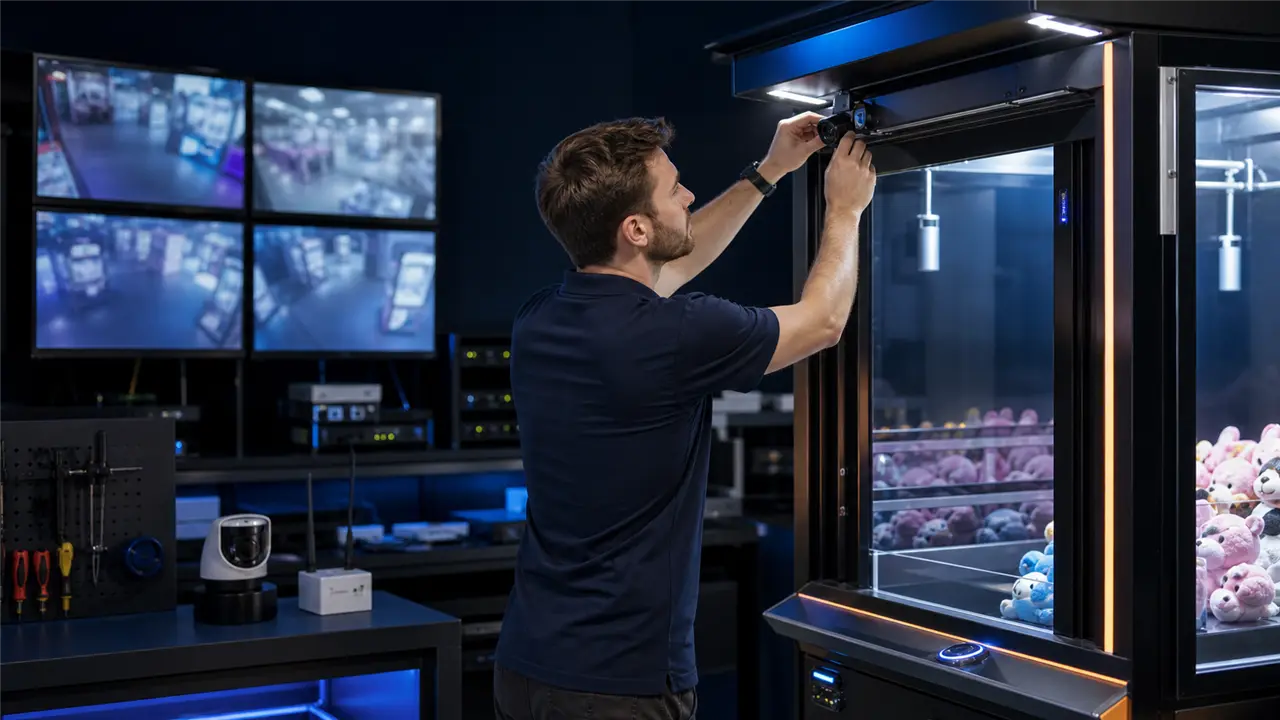
At the heart of every remote claw machine is the gantry crane assembly. Unlike the cheap direct current motors found in consumer grade toys, industrial units utilize highly precise 3 axis stepper motors. These motors allow the mainboard to track the exact physical coordinate of the claw carriage along the X, Y, and Z axes. By counting the digital steps pulsed to each motor, the control system maintains a virtual map of the carriage position within the physical cabinet.
The mechanical integrity of the gantry relies on reinforced linear guide rails and self lubricating nylon gears to withstand continuous operation. The X and Y axes handle horizontal positioning across the playfield, while the Z axis manages the descent and retraction of the claw assembly. Stepper motor drivers, often utilizing pulse width modulation, regulate the current supplied to the motor coils. This precise current control prevents motor stalling when the carriage reaches the physical boundaries of the cabinet, while also enabling smooth, jitter free movement that is critical for high definition live video broadcasting. The microstepping capabilities of these industrial drivers allow for fractional motor movements, reducing acoustic noise and mechanical resonance that could degrade the player experience.
Understanding how remote claw machines work requires analyzing the intricate feedback loops between these stepper motors and the master motherboard. While stepper motors operate in an open loop configuration by default, industrial remote cabinets incorporate optical limit switches at the extremes of each axis to establish a closed loop diagnostic fail safe. When the machine initializes, it drives the carriage until it breaks the optical beam of the limit switches, establishing a definitive zero coordinate home position. If the internal microprocessor step counter disagrees with the physical limit switch activation during gameplay, the crane machine optical sensor telemetry system instantly flags a loss of step error. This triggers an automatic recalibration sequence without requiring human intervention, effectively self healing mechanical desynchronization in real time.
Furthermore, the electrical back electromotive force generated by the motors is monitored to detect physical jams. If a plush toy becomes wedged in the gantry rails, the motor driver detects a spike in current and immediately halts operation to prevent structural damage or electrical fires.
Dual Camera Optical Alignment Focal Length and Parallax Correction
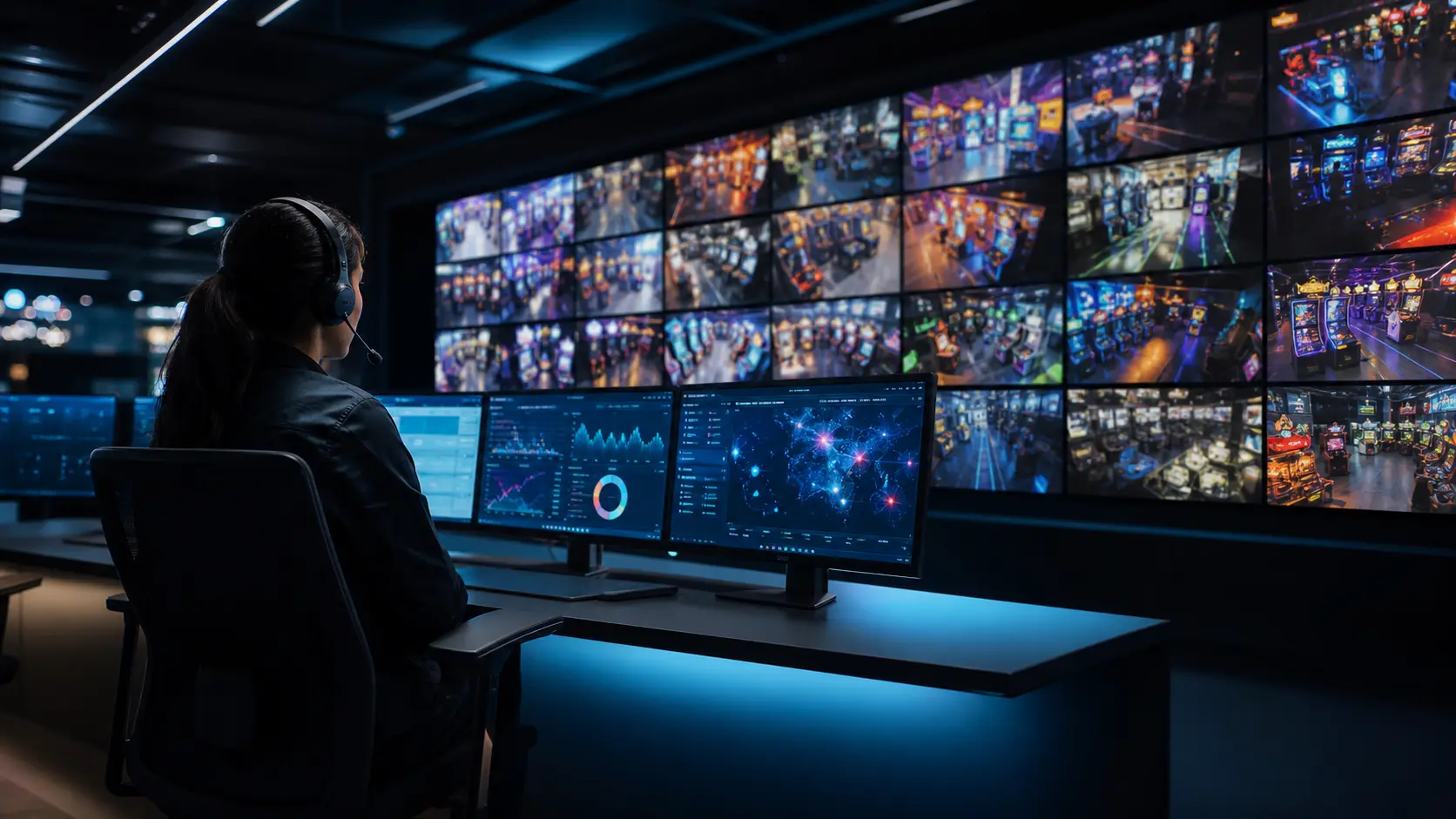
The primary interface between the remote player and the physical machine is the video feed. To provide an immersive and mathematically accurate spatial representation of the playfield, operators deploy a dual camera configuration. One camera is positioned at the front of the cabinet to provide a broad overview of the X and Y axes, while a secondary camera is typically mounted on the side or directly above the prize chute to aid in absolute depth perception. This stereoscopic approach compensates for the lack of binocular vision inherent in flat screen mobile devices.
Proper live arcade camera calibration is paramount to player success, fairness, and overall satisfaction. Technicians must carefully select optical lenses with appropriate focal lengths that completely eliminate barrel distortion, often known as the fish eye effect, which can make straight cabinet edges appear curved and distort the player judgment of distance. A focal length of 4 millimeters to 6 millimeters on a high grade 1 over 2.7 inch CMOS image sensor typically yields the best balance between a wide field of view and accurate spatial geometry. Furthermore, these sensors must be tuned for variable lighting conditions, employing wide dynamic range algorithms to prevent the bright LED cabinet strips from washing out the darker corners of the prize bed.
Parallax error presents a significant mathematical challenge in remote arcade environments. Because the player is viewing a three dimensional physical space through a two dimensional screen, the apparent position of the claw relative to the prizes changes depending on the specific camera angle and focal point. To mitigate this optical illusion, engineers employ strict alignment protocols and digital correction overlays. Cameras are rigidly mounted to industrial metal brackets that isolate the image sensor from the micro vibrations generated by the mechanical stepper motors. This ensures a crystal clear video feed even during rapid crane movements. Digital crosshairs and drop zones on the player user interface are mathematically calibrated to align perfectly with the physical dimensions of the cabinet, actively compensating for the specific viewing angle and lens distortion. This meticulous live arcade camera calibration guarantees that when a player initiates a drop command, the claw descends exactly onto the targeted coordinate, ensuring absolute mechanical fairness and building long term customer trust.
Infrared Prize Drop Sensor Triangulation and Anti Cheat Optical Gates
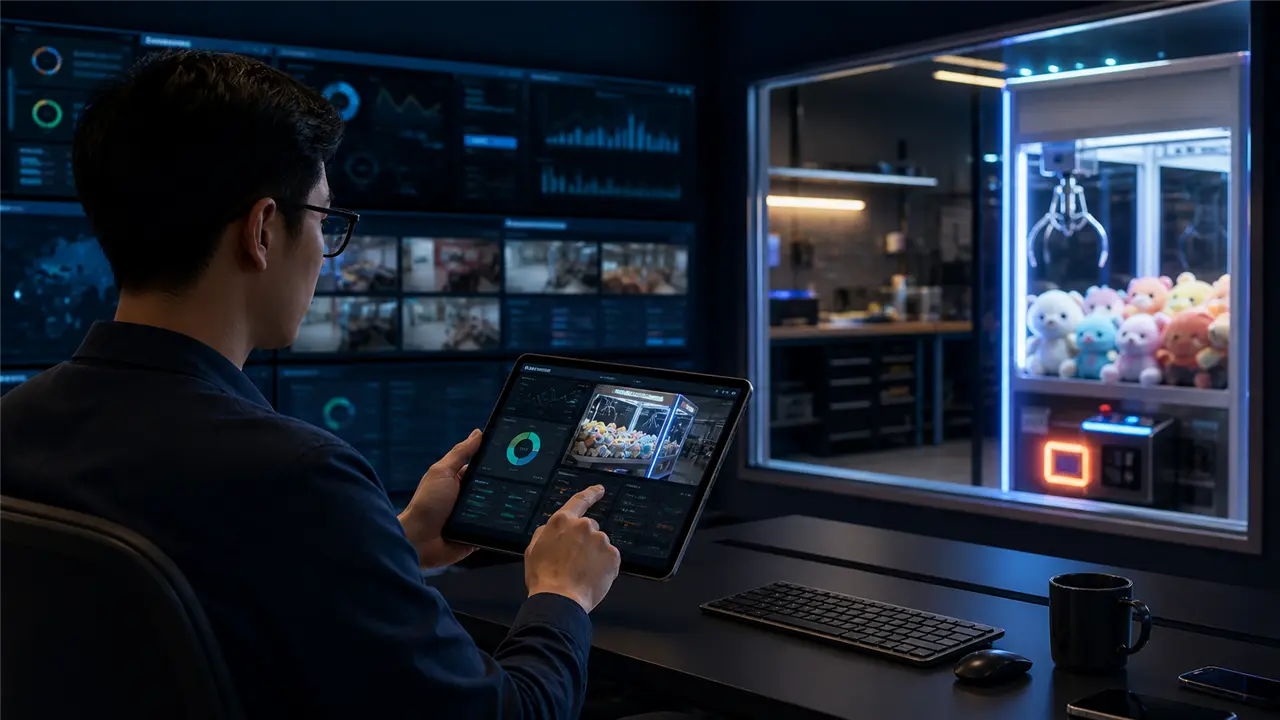
Accurate prize validation is the most critical financial metric for any remote arcade operation. Standard amusement machines often use a simple mechanical flap or a single inexpensive photo resistor to detect a prize entering the payout chute. However, these rudimentary systems are highly susceptible to false positives caused by ambient light variations, dust accumulation, or mechanical fatigue, leading to incorrect inventory tracking, payout disputes, and significant revenue leakage.
To resolve these vulnerabilities fundamentally, enterprise grade hardware employs drop sensor infrared triangulation. The prize chute is lined with a dense matrix of infrared emitters and receivers arranged in a sophisticated crisscross grid pattern. When an object falls through the chute, it breaks multiple infrared beams simultaneously across different temporal planes. The control board microprocessor rapidly analyzes the sequence, duration, and geometrical pattern of these beam breaks to determine the exact three dimensional size and density of the falling object. This advanced mathematical triangulation allows the system to distinguish definitively between a legitimate prize drop, a detached paper tag, or a piece of environmental debris.
Furthermore, this dense optical mesh functions as an advanced anti cheat optical gate. In offline scenarios, malicious actors sometimes attempt to trigger the drop sensor using inserted wires, tape, or external flashlight sources. While remote players cannot physically access the machine, operators must protect against localized interference from staff or environmental anomalies such as sunlight hitting the sensors. The infrared matrix operates on a highly modulated frequency, meaning the receivers only acknowledge light pulsing at a specific encoded kilohertz rate. Any unmodulated ambient light is entirely ignored by the optical receiver logic. This secure optical telemetry ensures absolute certainty in prize validation. Upon a successful matrix trigger, the system automatically updates the centralized server inventory database and dispenses digital rewards to the successful player account within milliseconds, creating an airtight, fraud proof validation loop.
Voltage Regulation DC Solenoid Power Modulation and Coil Heating Defense
The gripping mechanism of the claw relies entirely on a direct current solenoid coil. When electrical voltage is applied across the copper coil, it generates a concentrated magnetic field that pulls a central steel plunger upward, mechanically causing the claw prongs to close inward. The physical strength of this grip is directly proportional to the voltage applied across the coil windings. However, managing this immense power delivery safely and efficiently over thousands of cycles is a complex engineering challenge, especially in remote machines operating non stop without cooling periods.
Precise voltage regulation is achieved through solid state MOSFET power drivers controlled directly by the motherboard microcontroller. Instead of delivering a flat, continuous analog voltage to the solenoid, the system utilizes high frequency power modulation. By rapidly pulsing the electrical power on and off, a digital technique known as Pulse Width Modulation, the system can precisely control the effective average voltage applied to the coil. This allows operators to program variable, dynamic grip strengths for different phases of the single game loop. For example, a strong pick up voltage can be applied initially to lift heavy plush toys, followed by a dynamically calculated, slightly weaker carry voltage as the claw moves toward the chute to simulate traditional arcade physics.
A critical physical vulnerability in prolonged solenoid operation is thermal runaway. Continuous high voltage power application generates immense heat within the tightly packed copper windings due to internal electrical resistance. If left unchecked, this localized heat can melt the protective enamel insulating coating on the wires, leading to an internal short circuit and catastrophic failure of the entire solenoid assembly. To implement robust coil heating defense, the control board actively monitors the exact duration of power application and enforces strict thermal duty cycles. If a mechanical jam causes the claw to remain energized beyond a mathematically safe threshold, the system automatically cuts power, records an error state via the crane machine optical sensor telemetry, and alerts a maintenance technician. Additionally, flyback diodes are installed across the solenoid terminals to safely dissipate the high voltage inductive kickback generated when the magnetic field collapses, protecting the sensitive motherboard silicon from electrical damage.
Audio Capture Isolation and Ambient Noise Cancellation Microphones
While the high definition visual feed is the primary focus of remote arcade gaming, high fidelity audio significantly enhances the tactile illusion of physical presence. Players desire to hear the mechanical whir of the stepper motors moving the carriage, the metallic clank of the claw dropping, and the satisfying thud of a prize hitting the chute floor. However, a typical industrial arcade server farm houses hundreds of these machines in a single dense facility, creating a chaotic cacophony of overlapping mechanical noise, cooling fans, and ambient echoes.
To provide clean, isolated audio to the remote player, engineers must implement sophisticated audio capture isolation techniques at the hardware level. Directional electret condenser microphones are strategically mounted within the upper canopy of the cabinet. These microphones are typically suspended in shock absorbing silicone or elastomer mounts to prevent the physical vibration of the gantry rails from translating into low frequency audio rumble. These microphones feature a tight hypercardioid polar pattern, meaning they are highly sensitive to sounds originating directly beneath them on the playfield, while actively rejecting sounds arriving from the sides and rear where neighboring machines operate.
In addition to this physical acoustic isolation, dedicated digital signal processing plays a crucial role in ambient noise cancellation. The raw audio feed is passed through a hardware digital signal processor chip that applies real time multiband noise gating and equalization before it is encoded into the live stream. The digital noise gate automatically mutes the microphone channel entirely when the machine is mathematically idle, completely eliminating the continuous background drone of the warehouse facility. When the software registers that a player has initiated movement, the gate instantly opens with zero latency, capturing the intended mechanical sounds. Parametric equalization is then utilized to abruptly cut low frequency rumble from facility HVAC systems and emphasize the mid to high frequency mechanical clicks and clacks that players specifically associate with an authentic arcade experience.
Wiring Schematics Harness Pinouts and Field Maintenance Protocols
For field technicians tasked with maintaining a massive fleet of remote machines across multiple geographic facilities, standardized wiring schematics and harness pinouts are absolute non negotiable requirements. The incredibly complex electrical interplay between high torque motors, optical sensors, high definition cameras, and network interfaces necessitates a highly organized, interference free internal cabling infrastructure.
A professional claw machine wiring schematic dictates the exact spatial routing of high voltage alternating current power lines entirely separate from low voltage direct current logic and USB serial data lines. This physical separation is critical to prevent electromagnetic interference from corrupting sensitive optical sensor data packets. The mainboard acts as the central neurological hub, featuring distinct, color coded, and clearly labeled pinout headers for every single peripheral subsystem. For example, the JST-XH standard connectors used for stepper motors are rigidly pinned: Pin 1 carries A positive, Pin 2 carries A negative, Pin 3 carries B positive, and Pin 4 carries B negative. The precision optical limit switches utilize standardized three pin harnesses carrying 5 Volt power, Ground, and a digital Signal line. Adhering strictly to these universal pinout standards ensures that a technician can quickly hot swap a faulty component in under five minutes without needing to manually trace individual wires through the dark recesses of the cabinet chassis.
Field maintenance protocols for these remote units are heavily reliant on the rich diagnostic data provided by the hardware telemetry systems. Before a technician even walks onto the server floor to approach a faulty unit, they consult a centralized digital dashboard to review the exact machine error code and historical performance graphs. If the remote dashboard indicates a specific data failure in the drop sensor infrared triangulation matrix, the technician knows precisely to bring a replacement optical logic board and the specific twisted pair wiring harness associated with that array. This highly proactive, data driven approach to hardware maintenance drastically minimizes machine downtime, optimizes technician labor allocation, and maximizes the overall return on investment for the enterprise arcade operator.
Frequently Asked Questions
Question How do remote claw machines work over the internet
Remote claw machines operate by receiving encrypted digital commands from a client application and translating them into physical movements via a 3 axis stepper motor gantry crane. A central internet connected motherboard receives these movement vectors, calculates the required electrical pulses for the mechanical stepper drivers, and simultaneously encodes and streams low latency video back to the player device. The entire round trip command execution and video delivery is heavily optimized using advanced hardware encoding to occur within milliseconds, ensuring a highly responsive user experience.
Question What is crane machine optical sensor telemetry
This refers to the continuous, real time data stream generated by infrared limit switches, rotary encoders, and position sensors located throughout the gantry crane assembly. These precise optical sensors track the exact physical X, Y, and Z coordinates of the claw carriage. If the actual mechanical position ever deviates from the internal software coordinate map due to physical slippage or belt skipping, the telemetry system instantly detects the mathematical error, reports the anomaly to the central management server, and autonomously triggers a mechanical recalibration sequence.
Question How does live arcade camera calibration eliminate player latency
While software calibration cannot physically eliminate fundamental network packet latency, it effectively compensates for it visually and psychologically. Proper live arcade camera calibration involves carefully configuring the camera lenses to absolutely remove optical barrel distortion and perfectly aligning the digital user interface control overlay with the physical playfield below. This mathematically accurate spatial representation ensures that players can predict the claw drop trajectory flawlessly, entirely mitigating the frustration associated with minor network delays.
Question What makes a drop sensor infrared triangulation setup reliable
Unlike basic physical microswitches that can be easily fooled, mechanically jammed, or broken over time, infrared triangulation utilizes a dense matrix of invisible light beams crisscrossing the entire internal volume of the prize chute. When an object falls, the microprocessor measures exactly how many optical beams are broken, the precise sequence of the breaks, and the millisecond duration of the interruption. This advanced multi dimensional scanning accurately verifies the physical density and size of the prize, definitively rejecting false triggers caused by falling dust, detached paper tags, or localized cheating attempts.
Question Where can technicians find a standardized claw machine wiring schematic
Comprehensive wiring schematics and pinout diagrams are strictly provided by the original equipment manufacturer within the official technical service manual and enterprise portal. These highly detailed engineering diagrams outline the exact voltage specifications and pin locations for motor drivers, optical sensors, and voltage regulators. Technicians heavily rely on these approved schematics to safely troubleshoot complex electrical faults, trace intermittent data loss in the optical telemetry system, and ensure that solenoid power supply modulations are continuously operating within mathematically safe thermal limits.
***
Technical Support and Hardware Integration Consulting Engineer Wang Guangzhou Miba Animation Technology Co., Ltd. WhatsApp / WeChat +86 17620842078 Telegram https://t.me/JLwyc Email miba515527@gmail.com